

Why the ceasefire in Iran is failing
 admin
admin
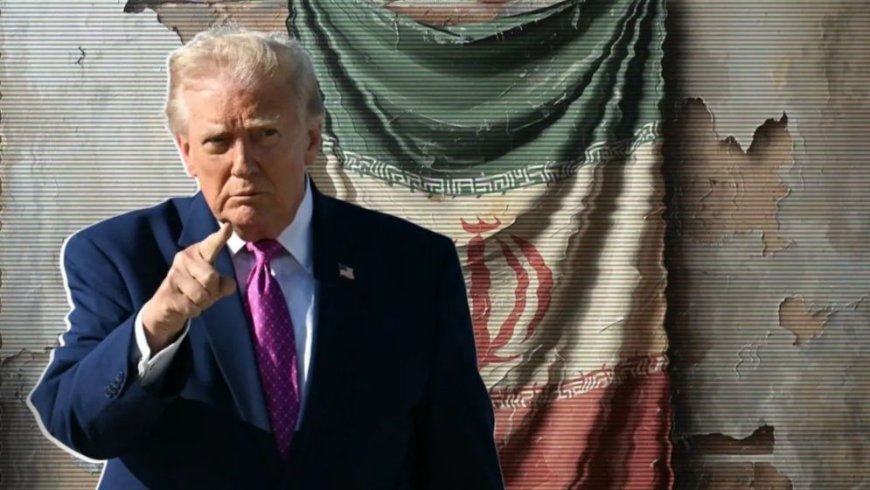
The first phase of ceasefire talks between Iran and the United States in the Pakistani capital Islamabad have ended without any concrete decisions. After 21 hours of talks collapsed, US Vice President JD Vance responded bluntly, saying, “Iran has refused to accept our conditions.”
Vance claimed that the United States wanted Iran to guarantee that it would no longer develop nuclear weapons; but Iran is reluctant to make that promise. On the contrary, Iranian officials allege that the United States is not ready for a compromise.
They see Washington’s demands, such as a long-term halt to uranium enrichment and the destruction of current stockpiles, as “extreme” or “maximalist,” which is completely unacceptable to Iran.
Iranian presidential adviser Mehdi Tabatabei echoed this sentiment on social media, writing, “We are eager for dialogue, but we will not bow to any baseless or coercive demands.”
A second round of talks is set to begin soon under Pakistani mediation. The current two-week temporary ceasefire is set to expire in just a week.
In the six-week conflict, a joint Israeli and US bombing campaign has killed many top officials, including Iran’s supreme leader Ayatollah Ali Khamenei. According to human rights organizations, the number of civilians killed in the country has exceeded 1,700.
In response, Iran has also launched counterattacks targeting US bases in the Middle East and has effectively blocked the Strait of Hormuz, one of the main routes for world trade. After such a terrible devastation, the question naturally arises—what will these two countries do now after Islamabad’s failure?
According to analysts, from a pragmatic perspective of international relations, mutual distrust is the biggest obstacle to the implementation of this agreement. Tehran fears that the US may regroup and launch a new attack under the guise of a temporary pause in the name of the agreement.
Read more
Israel's secret agenda regarding the Strait of Hormuz
March 25, 2026
Israel's secret agenda regarding the Strait of Hormuz
On the other hand, the US fears that Iran may be seeking a ceasefire in order to regroup militarily. Rather than bargaining, this is a kind of cold war to prove the balance of power, where both sides see compromise as their own weakness.
In such a situation, the main reason for the prolonged conflict is that both sides consider themselves winners in this war. The US claims that they are ahead in the fight by destroying Iran's leadership and military infrastructure. On the contrary, Iran claims that they have not only survived after hundreds of attacks, but have also taken control of important geographical areas like the Strait of Hormuz.
This is clear from the words of Ali Akbar Velayati, a senior advisor to the Ayatollah. Recalling the history of Alexander the Great being trapped in ancient Persia, he wrote, “Just as the Abu al-Hayat Pass was a symbol of resistance to foreigners in the past, today the Strait of Hormuz is a shield of strong resistance in our hands.”
A major factor in this complex equation was the lack of diplomacy. The three people who led the US delegation to the Islamabad talks (J.D. Vance, Steve Witkoff and Jared Kushner) lacked professional and traditional diplomatic experience.